
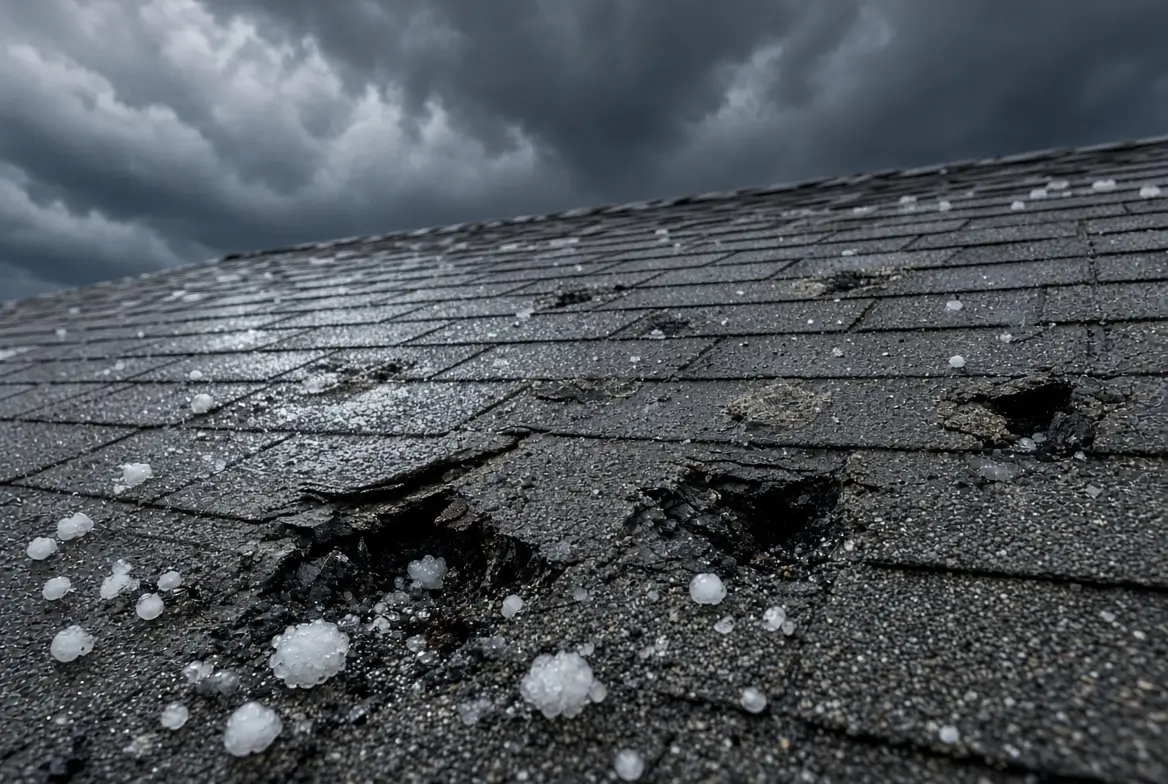
Think Your Ann Arbor Roof Has Hail Damage?
If you noticed dents, missing granules, bruised shingles, or damaged flashing after a storm, get your roof checked before a small problem turns into a costly leak.
Call 313-925-3442A hailstorm can last only a few minutes, but the damage it leaves behind can affect your Ann Arbor roof for years.
Homeowners in Ann Arbor and throughout Washtenaw County can see fast-moving severe thunderstorms during Michigan’s warmer months. These storms can bring heavy rain, strong wind gusts, lightning, and hail capable of damaging asphalt shingles, flashing, roof vents, gutters, siding, and other parts of a home.
The tricky part is that hail damage isn’t always obvious.
You may look at your roof from the driveway and think everything looks fine. Meanwhile, individual shingles may have been bruised, cracked, or stripped of protective granules. That damage can eventually create weak spots where rainwater gets underneath the roofing materials.
The good news is that there are several things you can look for after a hailstorm before a small roofing problem turns into a leak.
Why Ann Arbor Homeowners Should Pay Attention After a Hailstorm
Severe weather can move through Ann Arbor quickly. One minute you may have ordinary summer weather, and shortly afterward you’re dealing with heavy rain, strong winds, and hail.
That’s important because hail doesn’t need to leave a large hole in your roof to cause damage.
A hailstone can hit an asphalt shingle hard enough to bruise the material or knock loose protective granules. Strong winds can also loosen or lift shingles, while flying debris and falling branches can damage roofing materials, flashing, gutters, and vents.
A storm can be gone within minutes while the damage remains on your roof.
That’s why it’s worth checking your property after a significant hailstorm, especially if you heard hail hitting the house or received a severe thunderstorm warning for the Ann Arbor area.
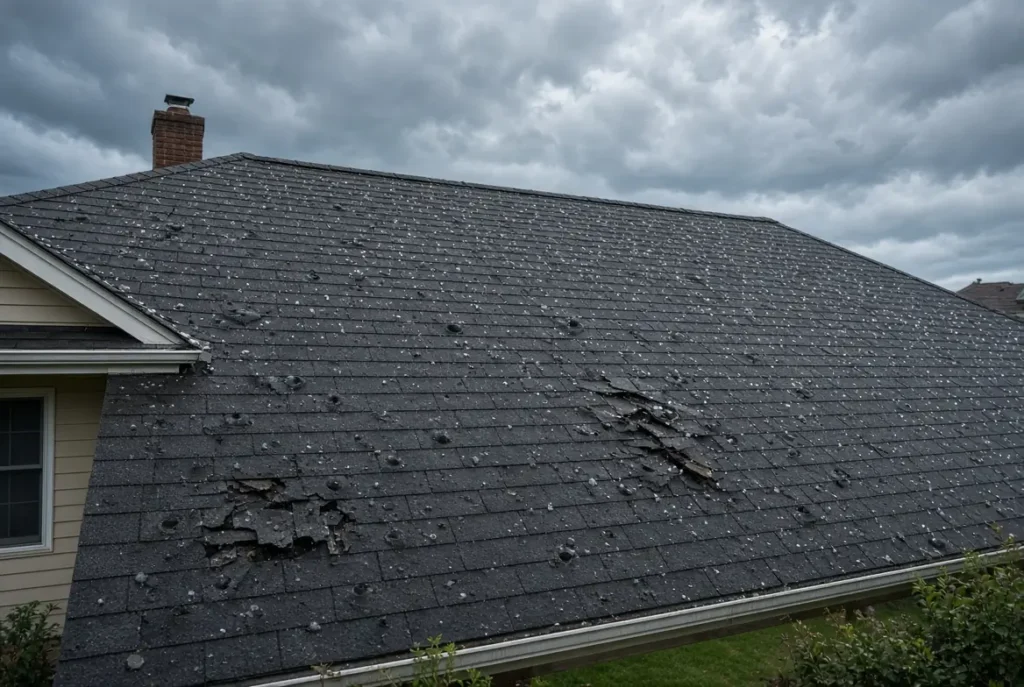
What Does Hail Damage Look Like on an Ann Arbor Roof?
Hail damage can look different depending on the size of the hail, the age and condition of your roof, and the roofing materials installed.
Some common signs include:
- Dented or bruised shingles
- Missing or excessive shingle granules
- Cracked or split shingles
- Dark impact marks
- Exposed areas underneath the shingle surface
- Dented metal flashing
- Damaged roof vents
- Dented gutters or downspouts
- Roofing debris around your property
One sign by itself doesn’t necessarily prove that your roof has hail damage. However, several new signs appearing after the same storm should get your attention.
1. Check Your Gutters for Shingle Granules
One of the easiest places to look after a hailstorm is your gutter system.
Asphalt shingles are covered with small mineral granules that protect the roofing material from weather and sunlight. A hard hail impact can knock some of those granules loose.
Look inside your gutters and around the bottom of your downspouts. If you suddenly see a large amount of granule material that wasn’t there before the storm, your roof may have taken a beating.
Keep in mind that older shingles naturally lose granules over time. A small amount isn’t necessarily a problem. A noticeable increase immediately after a hailstorm is more concerning.
2. Look for Bruised Shingles
Hail doesn’t have to punch a hole through a shingle to damage it.
A strong impact can create a soft or depressed area in an asphalt shingle. This is often referred to as bruising.
From the ground, you may notice:
- Small dark spots
- Circular impact marks
- Depressed areas
- Shingles that look different from the surrounding shingles
- Areas where granules appear to have been knocked away
Some bruising can be difficult to see unless you know what you’re looking for. That’s one reason a professional inspection can be useful after a significant Ann Arbor hailstorm.
3. Inspect Visible Metal Flashing
Your shingles aren’t the only roofing material that can be damaged by hail.
Metal flashing around chimneys, roof valleys, vents, skylights, and other roof penetrations can also show impact marks.
Look for new dents or dimples in exposed metal.
Flashing is particularly important because it helps keep water away from vulnerable areas of your roof. If flashing is damaged, water may eventually find its way underneath the roofing system.
Don’t climb onto the roof just to inspect flashing. Anything you can safely see from the ground can provide useful information, and a professional can inspect areas that aren’t safely accessible.
4. Check Your Roof Vents
Roof vents are another area homeowners often overlook.
Depending on the type of vent, hail can leave dents, cracks, or other impact marks. Use binoculars from the ground if you want a closer look.
If you notice obvious damage around a roof vent, it’s worth having the surrounding area inspected as well.
A damaged vent isn’t necessarily going to cause an immediate leak, but it can become another potential entry point for moisture.
5. Look at Your Gutters and Downspouts
Your gutters can provide clues about the severity of the storm.
Look for new dents, dings, or areas where the metal appears to have been struck repeatedly.
Also check for an unusual amount of shingle debris or granules inside the gutters.
Gutter damage doesn’t automatically mean your roof is damaged. However, if you find damaged gutters along with bruised shingles, missing granules, or damaged flashing, the roof deserves a closer look.
6. Check Your Siding and Window Screens
You don’t have to get on the roof to find evidence that your home was hit by hail.
Walk around the exterior and look at:
- Vinyl or metal siding
- Window screens
- Exterior trim
- Gutters
- Downspouts
- Outdoor equipment
- Other exposed surfaces
Fresh dents or impact marks on these surfaces can indicate that the storm produced significant hail at your property.
You may also find small pieces of roofing material around the yard.
These clues can help you decide whether it’s worth scheduling a professional roof inspection.
What to Do After a Severe Ann Arbor Storm
Once the storm has passed and conditions are safe, start with a ground-level inspection.
You don’t need to climb onto your roof.
Walk around your property and look for hail marks on siding, dents in gutters and downspouts, roofing debris, missing shingles, or anything else that looks different from before the storm.
Use binoculars if you want a closer look at the roof.
If the storm produced large hail or strong winds and you find several signs of impact, consider having the roof professionally inspected.
It’s much better to discover a damaged shingle while the roof is still keeping water out than to discover the problem because water is dripping through your ceiling.
Can You Check Your Roof for Hail Damage Yourself?
Yes, you can perform a basic visual inspection yourself.
The safest approach is to stay on the ground and use binoculars if necessary. Look for missing shingles, obvious dents, dark impact marks, damaged flashing, and areas where the roof appears different from normal.
You can also inspect your gutters, siding, windows, and the ground around your home.
What you shouldn’t do is climb onto a wet or damaged roof just to get a better look.
Roof inspections can involve steep surfaces, slippery shingles, and hidden structural problems. If the storm was severe or you’re seeing multiple warning signs, calling a professional is the safer option.
DIY Hail Damage Inspection Checklist
After a major storm, walk around your Ann Arbor home and check:
- Look inside gutters for excessive shingle granules.
- Look for missing or visibly damaged shingles.
- Use binoculars to inspect the roof from the ground.
- Look for dark or circular impact marks.
- Check visible flashing for new dents.
- Inspect visible roof vents.
- Look for dents in gutters and downspouts.
- Check siding and window screens for hail marks.
- Look around the yard for roofing debris.
- Check accessible attic areas for signs of moisture.
- Watch ceilings and upper walls for new water stains.
If you find several of these warning signs, a professional inspection is a good next step.
Why Can Hail Damage Cause a Leak Later?
One of the biggest misconceptions about hail damage is that a damaged roof will immediately start leaking.
That’s not always how it works.
A hailstone can damage the protective surface of a shingle without creating an obvious hole. The roof may continue keeping water out for a while.
But the damaged area is now more vulnerable to Michigan’s weather.
Rain, snow, freezing temperatures, ice, sunlight, and repeated temperature changes can gradually make damaged roofing materials deteriorate.
Eventually, water can find its way underneath the shingles.
By the time you notice a brown ceiling stain or water dripping into the house, the original hail damage may have been there for weeks or months.
That’s why inspecting your roof after a significant storm can be worthwhile even if everything inside your house appears dry.
5 Questions Ann Arbor Homeowners Ask About Hail Damage
1. How soon should I inspect my roof after a hailstorm in Ann Arbor?
It’s smart to perform a basic visual inspection once the storm has passed and conditions are safe. Start with the ground, gutters, siding, downspouts, and other easily accessible areas.
If you see evidence of significant hail, consider having the roof professionally inspected.
2. Can hail damage my roof without causing an immediate leak?
Yes.
Hail can bruise shingles, remove protective granules, or damage flashing without creating an obvious opening. The damage may eventually deteriorate and allow water underneath the roofing system.
3. Does finding granules in my gutters mean my roof has hail damage?
Not necessarily.
Some granule loss is normal, particularly on older roofs. However, a sudden increase in granules immediately after a hailstorm can be a warning sign, especially when combined with dents, bruised shingles, or other storm damage.
4. Do I need to replace my entire roof if I find hail damage?
Not automatically.
The appropriate repair depends on the severity and location of the damage, the overall condition of the roof, its age, and the type of roofing material.
Some situations may call for individual repairs, while extensive damage may require more significant work.
5. What should I do if I see hail damage but my roof isn’t leaking?
Don’t wait for a leak.
Take photographs of anything you find and have the roof evaluated. Identifying damage early can help prevent water intrusion and potentially more expensive repairs later.
When Should You Call a Roofing Professional?
You don’t necessarily need a professional every time it hails.
However, an inspection makes sense if you notice multiple signs of impact damage or if the storm produced particularly large or heavy hail.
You should also consider getting the roof checked if you notice:
- Missing shingles
- Significant granule loss
- Bruised or dented shingles
- Damaged flashing
- Cracked roof vents
- New ceiling stains
- Moisture in the attic
- Roofing debris around the property
- Dented gutters or downspouts
A professional can inspect areas that aren’t visible from the ground and determine whether the damage is likely to affect the performance of your roofing system.
Don’t Wait for a Roof Leak to Find Hail Damage
The best time to discover hail damage is before water gets into your house.
After a major Ann Arbor storm, take a few minutes to inspect your gutters, downspouts, siding, flashing, and visible roofing materials. Look for new dents, missing granules, bruised shingles, and other signs of impact.
If something doesn’t look right, don’t assume the roof is fine just because you don’t have a leak yet.
A small roofing problem is generally easier to address before it becomes water damage inside your home.
